

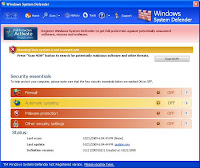
 Microsoft System Image Manager is the tool you use to build and assemble Windows 7 answer files. You can assemble features, packages, and answer file settings. Windows Setup uses Unattend.xml to assemble and customize the default Windows 7 installation for all conformation passes. For instance, you can assemble Internet Explorer, assemble Windows Firewall, and define the hard drive configuration. You can use Windows System Image Manager to assemble Windows 7 in several ways, including the following:
“Reliability Monitor is an advanced tool that measures hardware and software problems and other changes to your computer. It provides a stability index that ranges from 1 (the least stable) to 10 (the most stable). You can use the index to help evaluate the reliability of your computer. Any change you make to your computer or problem that occurs on your computer affects the stability index.”
Per Microsoft, the Reliability Monitor is intended for advanced computer users, such as software developers and network administrators, but it is easy to use, so even moderate users will have no problem using the tool to track their system over time.
There are two ways to find your PC’s Reliability history:
You can use Windows Search and begin typing the word ‘Reliability’ until the option shows.
Or
Right-click on the white flag in your taskbar to open Action Center.
Click Maintenance. Then, under Check for solutions to problem reports, click View reliability history.
In Reliability Monitor, you can:
* Click any event on the graph to view its details.
* Click Days, or Weeks, to view the stability index over a specific period of time.
* Click items in the Action column to view more information about it.
* Click View all problem reports to view only the problems that have occurred on your computer. This view does not include the other computer events that show up in Reliability Monitor, such as events about software installation.
The Reliability Monitor is a very basic program with a very basic use. It’s one of the many useful tools provided natively in Windows 7 which can help you keep your PC on the right track.
Source http://www.windows7news.com/
ARE YOU fed up with the continuous pop-up windows that block your enjoyment while you surf on the Internet? Do you experience the problem of hacking more often? Have you stopped visiting your favorite web sites and have stopped playing online games due to the unwanted disturbance of pop-up window?
The answer to all these questions is block spyware, which acts as a firewall and provides security by protecting your personal computer from viruses, pop-up windows and thus blocks all those annoying pop-up windows, which interrupt your enjoyment.
There are various ways to protect your personal computer from the regular threats and thus preserve your privacy. Anti-spyware is one of the most thorough and fast scanners that detect spyware and other exploits, which corrupt your computer programming. It scours the web for new threats and provides daily definition updates. It easily removes threats, such as adware, spyware, Win Fixer, Spy Axe, Spy Falcon and many more. So get a block spyware and free yourself with all the worries of spyware threats and enjoy your privacy.
Are your private documents on personal computer at risk?
To answer it simply, yes. Every time you access your Internet, unprotected and corrupted viruses or cookies and tracking devices are installed on your computer.
Spyware devices can be used to track your Internet activities, thus, hacking your keystrokes to obtain passwords or to gather important information from your personal files. So to avoid spyware, upload anti-spyware software, which maintains your privacy and helps to identify theft, thus, protecting your information from being robbed. One of the chief features of block spyware is that it blocks the threat that can corrupt the functioning of a PC.
Your privacy is our chief concern. Our business is to evacuate the web from all the corrupted companies that install spy software on your PC. Dangerous and annoying spyware can destroy your programming in many different ways, when you use Internet. Spyware removal utility provides a personal privacy tool that detects and eliminates destructive pests like spyware, adware and hacker tools. It confiscates virus and corrupt cookies, thus providing protection against non-viral malicious software that hack your private information, thus infecting your existing security and personal privacy. Block spyware provides you with all the necessities through which you can protect your personal information and can maintain your enjoyment and privacy in best possible way.
If you have ever downloaded music, video games or software or any stuff online. There is a very fare chance to your registry files are changed. These registry files can easily get changed. And when they are changed, you might not observe it right away.
For some time you didn’t run some program, you will never know the registry files for this are messed up. And just because of messing this file might not mean the program will not work. It may just work a lot slower. So when you ever have complained about your PC slow. Optimize the registry files also help to speed up your computer.
And Fix registry for Windows XP Professional you have to download a registry cleaner for Windows XP Professional. Once you download that software you install it in your computer, run a scan of your entire computer’s registry files. All of the errors will be found and let the registry repair software fix everything.
To fix this, you can download a registry cleaner for Windows XP Professional. Once you install this software, with a few easy steps Registry Mechanic will scan your entire registry for any invalid entries and provides a list of the registry errors found and registry cleaner software helps you to automatically fix computer.
If you still having problem then you can have online desktop support uk from any resource. There are number of online support services to help you.
1. You will need to delete those emails that are not in use from your system. This may be basic but surprisingly they are people who are always complaining, but who refuse to dump years and years of accumulated e-mail.
2. Get a good anti virus program (get only one), have it up to date, and auto monitoring.
3. Get a good anti spy ware program (get only one), have it up to date, and auto monitoring.
4. Run Disk Clean Up Daily to make sure that the unused datas will not use up your hard drive space (click Start> Programs> Accessories> System Tools> Disk Clean Up – a box opens – make sure each box is checked, click ‘OK’ – a box pops up – Click Yes).
5. Delete Cached Files and cookies Daily (click ‘Start’> Control Panel> Internet Options – a pop up box will appear – Delete Cookies, Click OK, Click Delete Files – check ‘Delete All Offline Content’ – Click OK, Now Set Your Clear History to no more than 7 Days – Click OK) This will help to improve computer speed when you get onto the internet.
6. A very important step almost everyone misses: Empty The Prefetch Folder (Click start> My Computer> C > Windows > Open Prefetch Folder > Select All(Ctrl+A) and press Delete – pop up box appears – Click Yes, Close Windows Window)
This will improve computer speed greatly.
7. Go to desktop and empty your Reycle Bin. This will make sure your computer have enough space to run programs as well as improve computer speed.
8. Scan Hard Drive ‘C’ (Start, My Computer, Right Click ‘C’ – box opens – Click Properties at the bottom – another box opens – Click Tools, Click Check Now, Make sure both ‘Automatically fix file system errors’ and ‘Scan for and attempt recovery of bad sectors’ are checked, Click Start)
This might take some time, so you can watch tv or do something else while it finishes. You will find your computer speed becoming much faster after that.
9. Defrag Your System (Start, Programs, Accessories, System Tools, Disk Defragmenter – window opens – Select ‘C’ Drive, Click Defragment).
Again, this might take some time, go and do something else to kill your waiting time.
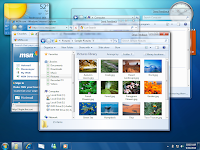
How to Access Windows 7 Media Center :-
Since the Media Center options have been crafted to be accessed by enabling the use of a special Media Center remote control along with a standard mouse, its interface is a lot times fluid than what can be usually found in other conventional Windows application. The first thing that will come in sight in the Media Center interface is the amount of audio and visual feedback it emits.
When a program is launched like the new Windows 7 and one selects the menu option thereafter, Windows gives you distinct tones and clicks as well as visual answers to enable people to know which menu option to opt for and when the selection is completed.
Once the preferred option is selected, the user can select and display its sub menu options by clicking on the mouse button. With the Media Center remote control, move up and down through the main menu options by pressing on the device’s up and down arrowheads. Click the OK button which is located around the middle of the remote from the one which separates the arrowheads and choose the main option accordingly.